
I Tried to Focus for 8 Hours Straight : Here's What Actually Happened
By Matthew TomaI wanted to know whether “eight hours of focus” was a realistic performance goal: or just another productivity slogan.
So I designed a workday around one demanding project and tried to stay locked in from the first keystroke to the final review. No social media. No casual browsing. No checking messages every few minutes. Just one knowledge-work objective, a timer, and a brutally honest log of what happened to my attention over the course of the day.
The short answer: I did not maintain perfect focus for eight straight hours.
Nobody can.
What I did discover was more useful: I could create several periods of high-quality focus, recover from predictable dips, and finish more meaningful work by managing my attention instead of trying to overpower it.
The Experiment: One Project, Eight Hours, Minimal Noise
I chose a complex writing and research project that required reading, synthesis, decision-making, and long stretches of uninterrupted production. It was the kind of work that rewards deep concentration but becomes noticeably harder when interrupted.
Before starting, I:
- Defined one specific outcome for the day.
- Closed unrelated browser tabs.
- Silenced notifications.
- Kept my phone outside the room.
- Prepared water and food in advance.
- Scheduled breaks instead of waiting until I was exhausted.
- Used one serving of Lucky Dose before the first demanding work block.
I followed the product label and treated Lucky Dose as one part of the protocol: not a replacement for sleep, food, movement, or recovery. The formula provides 100 mg of naturally derived caffeine alongside ingredients including Cognizin® citicoline, Dynamine®, TeaCrine®, and L-theanine. You can review the full formula on the Lucky Dose ingredients page.
My objective was not to prove that a capsule could create superhuman attention. It was to test whether a structured environment and a measured energy strategy could help me preserve useful cognitive output across a long workday.
Hour 1: The Easy Confidence of a Fresh Brain
The first hour felt almost effortless.
I had a clear target, no incoming distractions, and enough novelty in the task to keep my mind engaged. I moved quickly through the initial outline and started making decisions that had been sitting unresolved for days.
This is where the eight-hour-focus fantasy gets its power. Early progress feels like evidence that you can sustain the same intensity indefinitely.
But the opening hour is not a reliable forecast of the entire day. It is the cognitive equivalent of a warm-up lap.
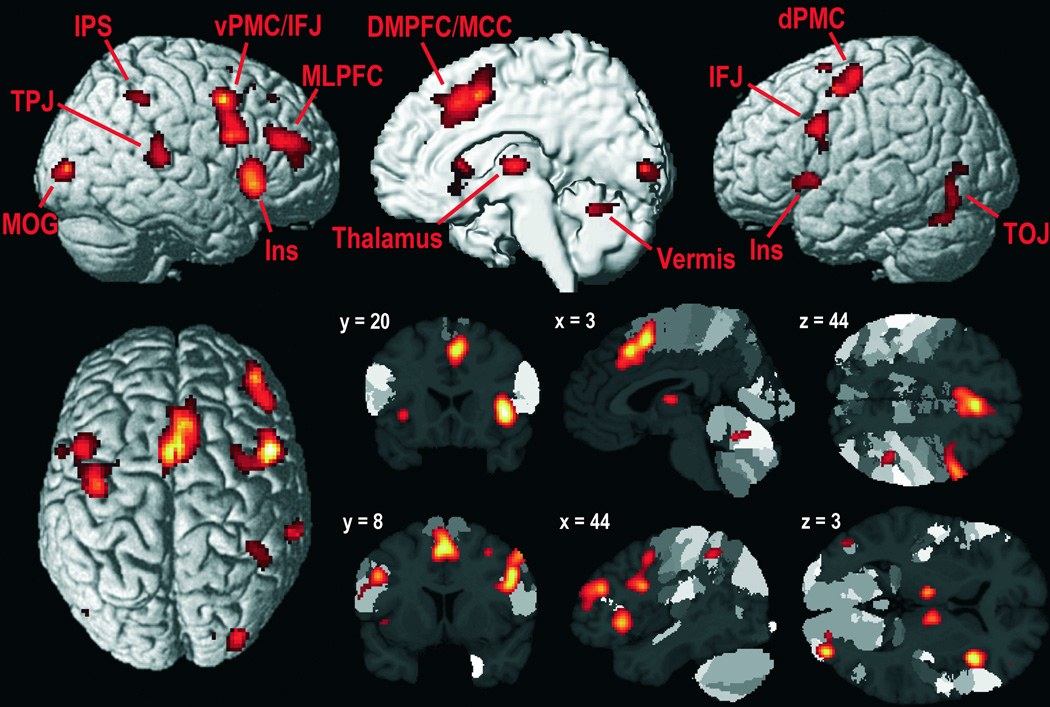
The brain is not simply “on” or “off.” Attention fluctuates from moment to moment. A major review of vigilant-attention research found that prolonged attention depends on a broad network involving frontal, parietal, insular, and subcortical regions. It also found that maintaining attention becomes more demanding as time on task increases.
In practical terms, focus is not a spotlight that stays fixed. It is a system that repeatedly reorients itself toward the task.
Hour 2: Focus Was Still Strong: but Less Automatic
By the second hour, I was still producing good work. The difference was that staying engaged required more deliberate effort.
I noticed small impulses to:
- Recheck email.
- Look up an unrelated question.
- Adjust my workspace.
- Read one “quick” article.
- Start a different section of the project.
None of these distractions was urgent. That was the problem. They were low-friction alternatives to difficult thinking.
I began using a simple rule: whenever I wanted to switch tasks, I wrote the impulse down instead of acting on it. Most of the items looked less important once they were on paper.
This was one of the most useful discoveries of the day. Focus did not require eliminating every distracting thought. It required preventing each thought from becoming a behavior.
That distinction matters for knowledge workers. You will think about lunch, messages, errands, and unrelated ideas during deep work. The goal is not to achieve a blank mind. The goal is to return to the primary task quickly.
Hour 3: The First Real Drop
Around the third hour, the work became slower.
I was still at my desk, but I was rereading paragraphs more often. Decisions that should have taken a few minutes began expanding into twenty-minute loops. I could continue working, but the quality of attention was no longer consistent.
This is the point where many people reach for more stimulation. Sometimes that helps alertness. It does not necessarily restore judgment.
Research on sustained attention describes a “vigilance decrement”: a decline in performance that can occur during prolonged task engagement. A 2020 EEG study found that extended sustained-attention tasks affected dynamic brain connectivity and that motivation could partially restore some performance-related patterns. The important word is partially.
Motivation is not infinite. Stimulation is not recovery. And neither one makes eight hours of uninterrupted high-precision work biologically realistic.
I took a ten-minute break, walked away from the screen, and avoided my phone. When I returned, I did not feel dramatically energized. I felt less mentally crowded. That was enough.
Hour 4: The Break Did More Than the Extra Caffeine
The fourth hour was better than expected.
I had assumed the morning decline would continue in a straight line. Instead, the break gave me a clean re-entry point. I reviewed my written objective, selected one narrow next step, and started again.
This was the first major lesson:
A break does not have to make you feel “fully refreshed” to improve your work.
It only needs to reduce the friction of returning.
The Lucidose Labs science page explains the company’s broader approach to cognitive performance: support useful energy and focus while respecting the role of formulation, consistency, and responsible use. That principle matched what I was experiencing. The best results came from combining an energy foundation with environmental control and recovery.
Lucky Dose supported the energy side of the protocol. It did not remove the need to stand up, look away from the screen, eat, or reset the task.
Hour 5: The Afternoon Was a Different Cognitive Environment
After lunch, my attention changed.
The task was the same, but my internal resistance was higher. I had more trouble initiating difficult sections and a stronger desire to perform easier administrative work instead.
This is where “all-day productivity” can become misleading. A person may remain busy for eight hours while only producing a few hours of high-value cognitive work. The visible workday is long; the highest-quality thinking is not evenly distributed across it.
I switched from open-ended creation to a more structured task: reviewing evidence, tightening language, and organizing decisions. This was not lowering my standards. It was matching the task to my available cognitive state.
Knowledge work needs multiple gears:
- High gear: writing, analysis, strategy, complex decisions.
- Middle gear: editing, organizing, research review, correspondence.
- Low gear: routine administration, planning, cleanup, and recovery.
Trying to stay in high gear all day is like trying to sprint through an entire training session. You may keep moving, but the quality of movement deteriorates.
Hour 6: Distraction Became More Attractive Than the Work
By the sixth hour, even small distractions felt disproportionately rewarding.
I wanted to check messages: not because anything was likely to have changed, but because the project had become effortful. The brain naturally evaluates the cost of continued effort against the appeal of alternative activities.
A 2025 commentary in Cognitive Science argues that perfect, uninterrupted vigilance is theoretically impossible. Attention naturally fluctuates, and even highly trained performers experience lapses. The practical implication is not defeatism. It is better system design.
I used a second reset:
- Stood up.
- Took several slow breaths.
- Wrote down the exact next action.
- Set a 30-minute timer.
- Worked only on that action.
The task immediately became more manageable. “Finish the project” was too vague. “Draft the next three paragraphs” was executable.
Hour 7: Precision Fell Before Motivation Did
The most surprising part of the experiment was that I did not feel completely exhausted before my output became less precise.
I could still generate sentences. I could still answer questions. I could still tell myself that I was working.
But my error-checking was weaker. I missed repetition. I accepted mediocre wording. I spent too long polishing low-impact details while overlooking larger structural issues.
This is why subjective confidence is not a perfect measure of cognitive performance. You can feel functional while your accuracy, speed, and decision quality are quietly drifting.
The 2019 study by Reteig and colleagues found that prolonged attention increased temporal variability in cortical responses. In plain English, the brain’s responses became less consistent as sustained attention continued.
For high-stakes work, that matters. A slower response is visible. A subtle loss of precision is often not.
Hour 8: I Finished the Workday: Not Eight Hours of Perfect Focus
I completed the eight-hour experiment, but I did not achieve eight hours of uninterrupted deep focus.
My actual day looked more like this:
- Several strong focus blocks.
- A few shorter periods of mental wandering.
- Planned breaks that prevented larger crashes.
- Administrative work placed around the highest-focus periods.
- A final review that revealed quality issues I would have missed if I had simply trusted my sense of productivity.
The experiment worked when I stopped treating focus as a continuous state and started treating it as an endurance system.
What Actually Helped
1. One clear target
A specific outcome reduced decision fatigue. “Work on the project” was weak. “Complete the first draft and identify three unresolved questions” was actionable.
2. Removing interruptions
Notifications create switching costs even when you do not respond. Put distractions outside the work environment instead of relying on willpower.
3. Breaks before collapse
Take a short, screen-free break before your attention is completely depleted. Prevention worked better than attempting to recover from a full crash.
4. Matching tasks to cognitive state
Reserve your sharpest hours for synthesis, writing, analysis, and strategic decisions. Use lower-demand periods for editing and administration.
5. Responsible energy support
If you tolerate caffeine, use it deliberately rather than continuously escalating intake. Lucky Dose contains 100 mg of natural caffeine plus a broader focus-oriented formula. Follow the label, account for all other caffeine sources, and do not use it to compensate for chronic sleep loss.
6. A defined re-entry ritual
After every break, write the next physical action. Make returning automatic.
The Real Takeaway
The goal is not to focus for eight hours straight.
The goal is to protect enough high-quality attention to make meaningful progress, then use breaks and task design to preserve precision for the rest of the day.
That is the difference between being busy and being effective.
For me, Lucky Dose fit best into a broader protocol: one deliberate energy input, a controlled environment, clear objectives, structured recovery, and honest monitoring of work quality. That approach felt more sustainable than chasing constant stimulation or pretending that fatigue was a character flaw.
Check out the Lucky Dose lab report for information about batch testing and quality verification, and review the full usage details before adding it to your routine.
Legal disclaimer: These statements have not been evaluated by the U.S. Food and Drug Administration. Lucky Dose is a dietary supplement and is not intended to diagnose, treat, cure, or prevent any disease. Keep out of reach of children. Do not use if pregnant or nursing. Consult your healthcare provider before use if you have a medical condition or are taking prescription medications. Not intended for use by persons under 18. Limit additional caffeine intake and discontinue use if adverse effects occur. This article is for informational purposes only and does not constitute medical advice.